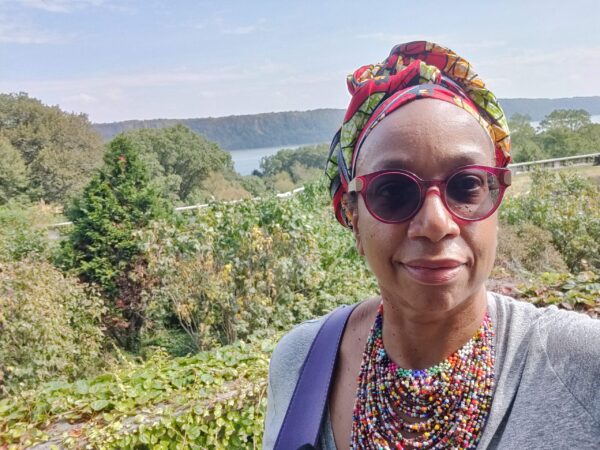
Meet the Practitioner: Carol Adams of Cardiff Farmers Markets
Carol Adams is the Enterprise Manager of Cardiff Farmers Markets, a not-for-profit organisation that has been operating for over 25 years, running established weekly farmers markets across Cardiff, including Riverside, Roath and Rhiwbina. The markets exist to support small-scale, independent producers, with a strong emphasis on local, agroecological and ethically produced food. They prioritise direct trading, transparency, and fair returns for producers, while creating welcoming community spaces where people can access high-quality local food. Alongside market trading, they work on projects that improve access to fresh produce for communities experiencing food insecurity, and actively support producers whose practices protect soil health, biodiversity and animal welfare.
What does agroecology/nature-friendly farming mean to you within the context of your business or farm?
As a market manager supporting agroecological producers, agroecology is about how food systems work in practice, not just how food is grown. It means supporting farming that works with nature rather than against it, while also ensuring producers can earn a viable living and communities can access good food.
In my role, agroecology shows up in the way markets are curated, the producers we prioritise, and the standards we set around provenance, scale and production methods. Markets can either reinforce industrial supply chains or actively support agroecological farming — and I see my role as ensuring they do the latter.
How did your agroecological journey begin? What inspired the shift toward this approach? Was there a turning point or specific challenge that motivated the change?
My journey into agroecology came through working in food systems rather than farming itself. Through my work locally and internationally, I saw how small-scale, agroecological producers consistently face barriers — from access to markets and pricing pressure to competing with larger, non-equivalent businesses.
I also saw the difference that well-run farmers’ markets can make: shortening supply chains, keeping value with producers, and reconnecting communities with where food comes from. That was a turning point for me — recognising markets not just as retail spaces, but as infrastructure that can actively support agroecology if designed and managed intentionally.
How do you put the principles of agroecology into action day to day? For example, in soil management, biodiversity, community engagement, or business operations.
Day to day, this means prioritising agroecological producers when allocating market space, rather than defaulting to scale or volume, and holding clear boundaries around provenance, production methods and transparency. It involves actively supporting mixed, small-scale farms that work with biodiversity rather than monoculture, and designing access schemes, such as subsidised veg initiatives, so that agroecological food is not only available to those who can afford a premium. I also work closely with producers to ensure markets remain economically viable for them, recognising that consistency and trust are essential for agroecological businesses. Markets are one of the few places where agroecological producers can sell directly, retain value and tell their story, and protecting that space is a core part of my role.
What are the main challenges you face? Where do you see the biggest policy gaps or opportunities?
One of the biggest challenges is that local market infrastructure is often undervalued in policy, despite playing a crucial role in supporting agroecological farming. Small producers depend on markets to survive, yet markets themselves are rarely recognised or supported as a core part of the food system. Alongside this, producers face rising costs, pressure to compete with businesses that do not operate to equivalent environmental or social standards, and limited policy support for schemes that improve access to agroecological food for lower-income communities. At the same time, there is a significant opportunity for policy to recognise farmers’ markets as public-good infrastructure, support access schemes that connect agroecological producers with communities, and ensure fairer competition by acknowledging the true costs of sustainable production.
Why do you believe agroecology is vital to the future of UK food and farming?
Agroecology offers a way to build food systems that are resilient, environmentally responsible, and socially just. From my perspective, its strength lies not only in ecological outcomes, but in its ability to keep food production rooted in place, community and relationships.
Without agroecology, we risk further consolidation, longer supply chains, and systems that exclude both small producers and many consumers. With it, we can build food systems that are better for farmers, better for the environment, and better for public health — but only if the wider infrastructure around agroecology, including markets, is supported to thrive.