Meet the Practitioner: Jenny and Mark Lee of Torpenhow Dairy
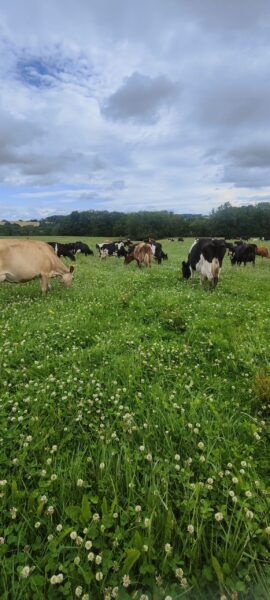
Jenny and Mark Lee farm with their daughters at Park House in Torpenhow, North Cumbria. It is a 350 acre organic, Pasture for Life certified dairy farm, consisting of 100 acres of wooded pasture and 25 acres of Atlantic Rainforest. The Lee family have been making cheese and gelato on farm since 2019 and have tripled employment numbers since starting their diversifications. The only RSPB Fair to Nature certified cheesemakers, this year Jenny and Mark were awarded The Royal Agricultural Society of England Excellence in Practical Farming award.
What does agroecology/nature-friendly farming mean to you within the context of your business or farm?
Over 90% of the public believe farms should operate in partnership with nature. As a farm that wants to make a positive economic, cultural and environmental impact, we need to make space for nature and make it part of our decision-making process.
How did your agroecological journey begin? What inspired the shift toward this approach? Was there a turning point or specific challenge that motivated the change?
We were farming intensively back in 2014, three times a day milking fully housed holsteins. The milk price forced us to change our farming system to a low input grazing model. In 2017 we had sprayed a field with glyphosate to kill some weeds but one of the nozzles was blocked. This stripped the field and we noticed that when the cows returned a few weeks later they were grazing in straight lines where the chemical hadn’t been. This was our light bulb moment to read more about the effect of chemicals on the soil. We became certified organic in 2020 and 100% pasture fed the following year.
How do you put the principles of agroecology into action day to day? For example, in soil management, biodiversity, community engagement, or business operations.
Agroecology is a mindset as much as a practice. To be effective as a Nature Friendly Farm, the impact of decisions on nature, habitat and biodiversity needs to be considered when planning a change. We have made strides to eliminate slurry on our farm by bale grazing and planting 120 acres of wooded pasture, to allow the cows to be outside over 300 days a year. We rotational graze, so we move the cows every day and don’t return to the field for 40 days, allowing the rest required to regenerate the plants. This promotes increased root growth, making for healthier soils and more nutritious feed.
What are the main challenges you face? Where do you see the biggest policy gaps or opportunities?
The main challenges lie in a lack of focused policy and funding to allow a proper transition from a high input model to a more nature friendly food production system. We need clarity and certainty that the changes we make to improve habitat are going to be supported for longer than the term of a government. We don’t see proper change in the soil for 5 years, so forward planning and financial stability are keys to success.
Why do you believe agroecology is vital to the future of UK food and farming?
Agroecology is fundamental to the security of our country. We need systems that can be self-supporting without the requirement for importing seed or fertiliser. We need long-term sustainability for farming communities to prosper and we need to enhance our environment for the benefit of all our citizens. Agroecology is the most practically effective way of achieving this at the least cost. It is already happening, certainly in Torpenhow, but for system change across the nation, we need clear political leadership at the highest level for a sustained term.