Food Justice
Food as a tool for community connection, advocacy, and system change.
What is Extended Table?
Extended Table is a project that uses the power of food, through inclusive food-based activities, to build social connection, strengthen relationships, support individual advocacy and amplify community voices. It aims not only to empower people locally, but also to influence wider systems change, ensuring that the values and priorities of communities shape the decisions that affect their lives.
Alongside the Real Farming Trust, there are four project partners, all of which are directly engaged in marginalised communities across the UK at grassroots level: Brighton and Hove Food Partnership, Cyrenians in Edinburgh, NOW Group in Belfast and The Hornbeam Centre in London. These are the 4 same partners that the Real Farming Trust collaborated with on the Ready Health Eat (RHE) project (2020-2023), all keen to continue working together at the intersection of food and social justice.
The 5 year project runs until Autumn 2030 and is supported by the National Lottery Community Fund.
Why this project?
- We believe in the power of strong, connected and diverse communities.
- We believe that people with lived experience are best placed to advise on what changes are needed to their situations.
- We want to see dignity, equity and innovation in food provision, particularly within marginalised communities.
What activities and opportunities are being offered?
Food activities:
Our delivery partners all offer food activities in their communities. These activities bring people together, creating a meeting place from which to build community and amplify community voices.
Recent highlights include well attended free community meals, social eating spaces offered at foodbanks, and cookery classes.
Advocate training:
Each partner is recruiting, training and supporting advocates to convey their community’s messages to people who hold the power to bring about changes. The partners will set up opportunities for them to address audiences locally and nationally.
From training in boundaries, to preparing to speak to an audience of partners across the project or to visit their local MP in Westminster, our partners are providing people with the support and opportunities to have their voice heard about what matters to them.
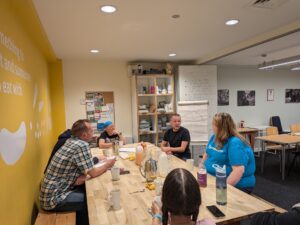
Volunteers receiving advocacy training at Cyrenians, Edinburgh
Systems change:
The partners will work together to identify key issues and to work towards change in their sectors and beyond. They will do this by engaging, training and influencing other organisations to make interventions to address the issues raised by the participants.
An upcoming highlight is a People’s Assembly to open conversations about surplus food provisions.
Who are our partners and what are they doing?
NOW Group (Belfast)
NOW Group work with neurodiverse people and people with learning disabilities in Northern Ireland. They are working to help young people widen options when leaving school. Their project activities include: delivering sessions to students with learning difficulties in integrated schools across Northern Ireland covering modules such as bakery, digital and building networks for future; and facilitating events bringing students, local community and activists together to eat and have open discussion. They also lead on Extended Table project management and reporting.
The Hornbeam Centre (London)
The Hornbeam Centre are a climate and community hub which coordinates Waltham Forest Food Partnership. They seek to address food insecurity and provide opportunities for their diverse local communities to influence their wider food system, and to change a system of crisis food support to a network of social eating spaces. Some of their project activities include: delivering community cafe sessions for the local community to gather and eat; and running solidarity supermarket sessions to provide affordable food to locals.
Cyrenians (Edinburgh)
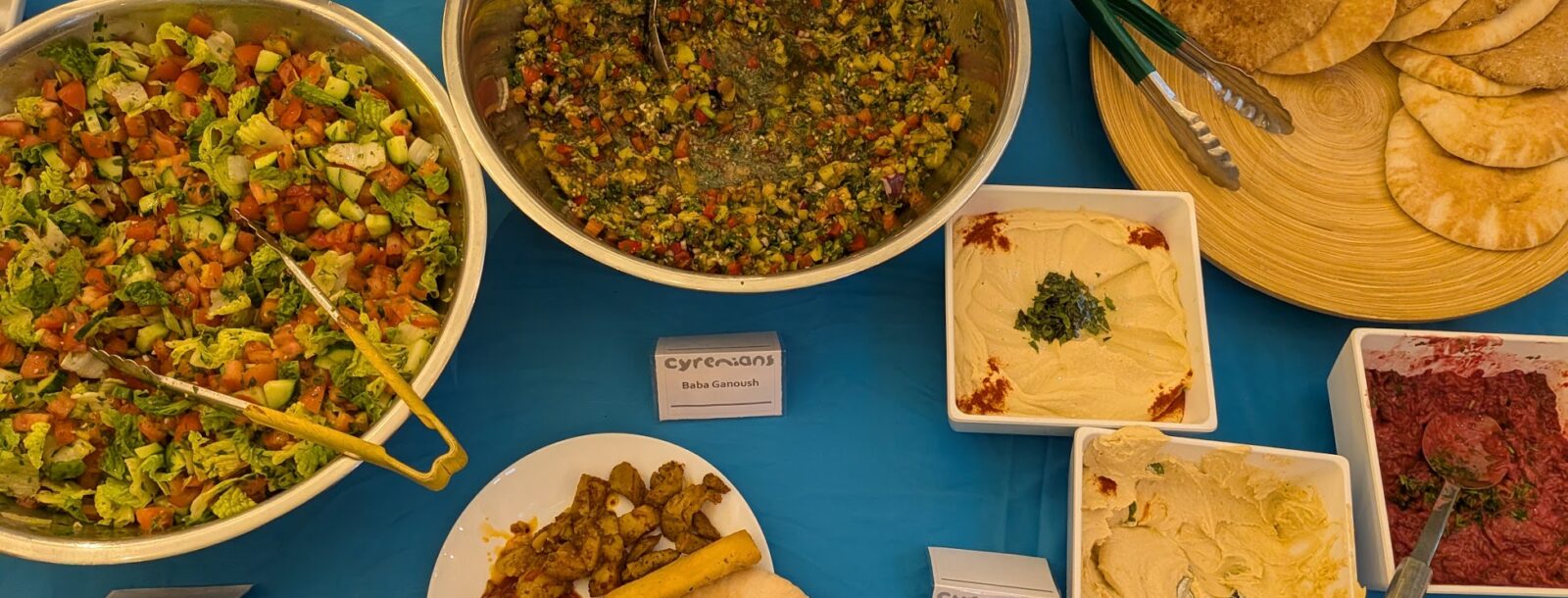
Cyrenians work with people who are homeless or at risk of homelessness. They use food-based activities such as community lunches as a key community intervention. They aim to enable people to address food poverty and health inequalities whilst building community bonds as people learn together and eat together. Their project activities include: providing social eating spaces which offer soup and social connection in spaces such as foodbanks, cookery classes, and a well attended weekly free lunch club, with sometimes over 40 attendees.
Brighton and Hove Food Partnership
Brighton and Hove Food Partnership work across their area with groups addressing food insecurity. They are seeking to demonstrate a place-based approach, ‘everyday food activism’, that engages people experiencing poverty, mental ill-health and exclusion in community food activities, building self-confidence and providing less heard voices the opportunity to articulate the systems changes they want to see. Their project activities include: holding therapeutic horticulture classes; cookery classes, and Food Systems education. A 9 week Food Systems course was recently completed, generating great energy and enthusiasm, with many participants reporting that they would intend to take local food action as a result of their increased empowerment after the course.
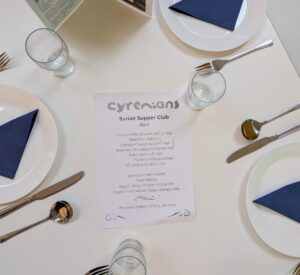
Table setting at an Extended Table Syrian supper club at Cyrenians.
Food systems and beyond
The Extended Table project is invested in system change, from the participants through to local and national communities and organisations.
Some of our goals include:
- For participants to meet people they usually wouldn’t, to feel more connected with their community, and to be more empowered to take action to influence issues that matter to them.
- For communities to be better able to reach new groups of people, and better able to advocate for their needs.
- For partner organisations to integrate lasting changes as a result of the programme and to be more equipped to support people from diverse backgrounds.
- To influence other organisations to take a social response to food needs and address social situations that reduce access to good food.
Measuring and sharing what is learnt
The Real Farming Trust is responsible for evaluation and communications: identifying, documenting and sharing learning arising from the programme to ensure findings are most effectively used to influence wider change in food systems and beyond.
We are using various evaluative methods to reveal and understand the issues arising, including a formal Social Return on Investment (SROI) process, Photovoice (as in Twinning), and a collection of longitudinal personal narrative surveys.
We are using evidence-based, participant-led communications to empower partners’ communities with tools and resources to advocate for the changes that matter to them; and build broad and diverse audiences. Our communications aim to expand and diversify conversations around agroecology, community work and social justice.


Related articles